How to Succeed in SHRM: Expert Strategies for HR Professionals
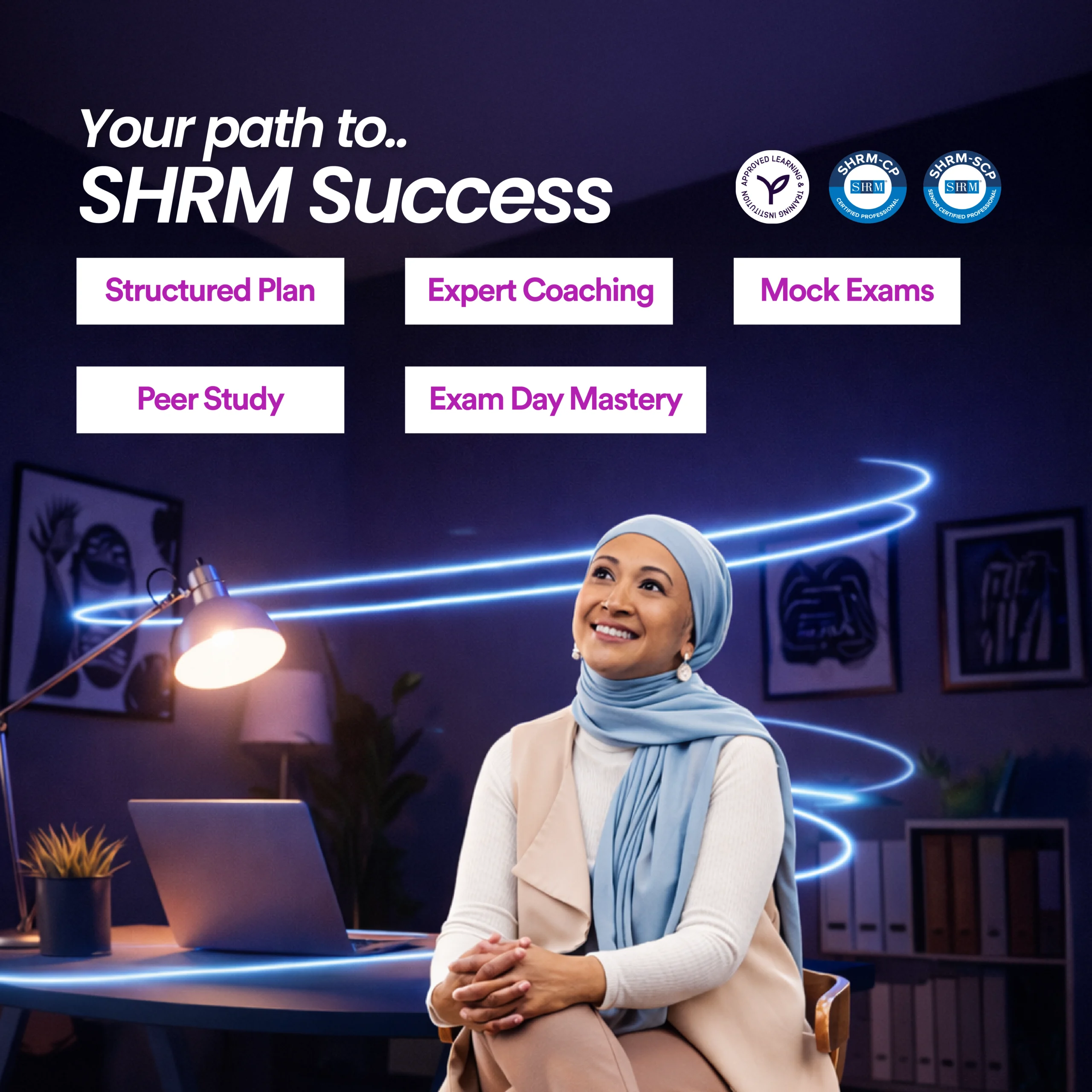
Your Path to SHRM Success
SHRM certification is a benchmark for HR excellence, demonstrating expertise in leadership, strategic thinking, and workplace decision-making. Many HR professionals aspire to earn this credential, but navigating the exam’s rigorous standards can be daunting.
To succeed in SHRM, you need more than memorisation; you need structured preparation, guided practice, and a clear understanding of SHRM’s Body of Applied Skills and Knowledge (BASK). This article provides actionable steps, expert tips, and resources to help you confidently achieve SHRM certification.
Understanding the SHRM Exam
SHRM exam evaluates judgment, decision-making, and practical HR knowledge rather than rote memorisation. Understanding the exam structure is the first step to success.
Key Features of SHRM CP and SCP Exams:
- Scenario-Based Questions: Focus on workplace situations requiring judgment and application of HR principles.
- Competency-Focused Assessment: Tests behavioral competencies and technical knowledge across HR domains.
- Time Management
Pressure: Candidates must answer questions efficiently
Knowing these elements allows candidates to tailor their preparation for the SHRM exam, focusing on mastery rather than memorisation.
Learn more on the SHRM Certification Overview
Step 1: Create a Structured Study Plan
To succeed in SHRM, a disciplined and structured study plan is essential. Follow these guidelines:
- Set a Clear Timeline: Allocate 8–12 weeks of focused study before your exam date.
- Divide Topics by Domain: Break the BASK framework into manageable sections.
- Schedule Weekly Mock Exams: Build familiarity with the exam format and scenario-based questions.
- Plan Topic Reinforcement: Dedicate time to revisit challenging areas regularly.
Structured planning ensures consistent progress and prevents last-minute cramming, which reduces stress and improves performance.
Step 2: Engage With Malaysia HR Forum Expert Guidance
Many candidates struggle when studying alone. Engaging with experienced SHRM trainers can accelerate learning and improve understanding of complex topics.
Benefits of Expert Coaching:
- Clarifies SHRM’s scenario-based thinking and preferred actions
- Offers targeted feedback on practice questions
- Helps identify strengths and weaknesses in each competency domain
- Provides exam strategy techniques such as time management and elimination methods
Structured coaching transforms preparation from passive reading into active learning, increasing the likelihood to succeed in SHRM.
Step 3: Practice With Realistic Mock Exams
Mock exams are crucial to building confidence and familiarity with SHRM’s question style.
- Simulate Exam Conditions: Time yourself and avoid distractions to mirror real exam
pressure.
- Analyse Mistakes: Review incorrect answers to understand reasoning and improve judgment.
- Repeated Exposure: Taking multiple mock exams strengthens decision-making and reinforces learning.
Consistent practice reduces anxiety on exam day and ensures that you can apply HR knowledge effectively under time constraints.
Step 4: Join Peer Study Groups
Collaboration with peers offers additional insights and accountability.
- Share study tips and practical experiences
- Discuss scenario-based questions and alternative solutions
- Stay motivated through group accountability
- Receive emotional support during exam preparation
Peer interaction can illuminate perspectives you may not have considered and strengthens your ability to apply knowledge in practical situations.
Step 5: Focus on Mastery, Not Memorisation
SHRM emphasises critical thinking over rote memorisation.
- Understand HR principles and their real-world application
- Analyse case studies and scenarios rather than just reading theory
- Identify patterns in judgment questions to predict likely approaches
- Practice behavioral competency application consistently
This approach ensures deeper learning and prepares candidates to handle unexpected questions confidently, a key strategy to succeed in SHRM.
Step 6: Manage Time and Stress Effectively
Time pressure can challenge even experienced HR professionals. Developing effective strategies is crucial:
- Prioritise high-value questions first
- Use elimination techniques to narrow answer choices
- Take short mental breaks during long study sessions
- Maintain a healthy study-life balance to reduce burnout
Effective time and stress management enables sharper focus and better decision-making during the exam.
Step 7: Leverage Supportive Programmes
Programmes like Malaysia HR Forum’s SHRM preparation courses provide comprehensive support:
- Structured weekly plans and revision sessions
- Trainer guidance and Q&A for every question
- Real SHRM-style mock exams
- Peer study support and community engagement
- Retake strategy guidance if required
With professional guidance and a structured programme, candidates significantly increase their chances to succeed in SHRM.
Your SHRM Success Starts Today
To succeed in SHRM, combine structured study, expert guidance, realistic practice, and peer collaboration. Preparation is not just about passing. It’s about mastering HR competencies and decision-making skills for long-term career growth.
Invest in a professional SHRM prep programme, follow a consistent study plan, and leverage resources and support communities to boost confidence and exam readiness. Your career deserves this level of preparation, and with the right strategy, success is attainable.
Frequently Asked Questions: Your Path to Succeeding in SHRM
Q1: I faced challenges in the past; can I still succeed in SHRM?Absolutely! With a structured plan, expert coaching, and focused practice, you can significantly improve your performance.
Q2: How long should I prepare before the SHRM exam?Most candidates find that dedicating 8–12 weeks to structured study works wonders. This timeframe allows you to build a solid understanding and take regular mock exams, boosting your readiness and confidence!
Q3: Is peer support really helpful?While it’s not mandatory, joining peer study groups can enhance your learning experience. Sharing insights, discussing challenging topics, and staying accountable with friends makes the preparation journey more enjoyable and effective!
Q4: Are mock exams actually beneficial?Absolutely! Mock exams are fantastic for simulating real exam conditions, reinforcing your knowledge, and building your confidence. They help you sharpen your decision-making strategies, so you’ll be well-prepared on the big day!